

No products found.
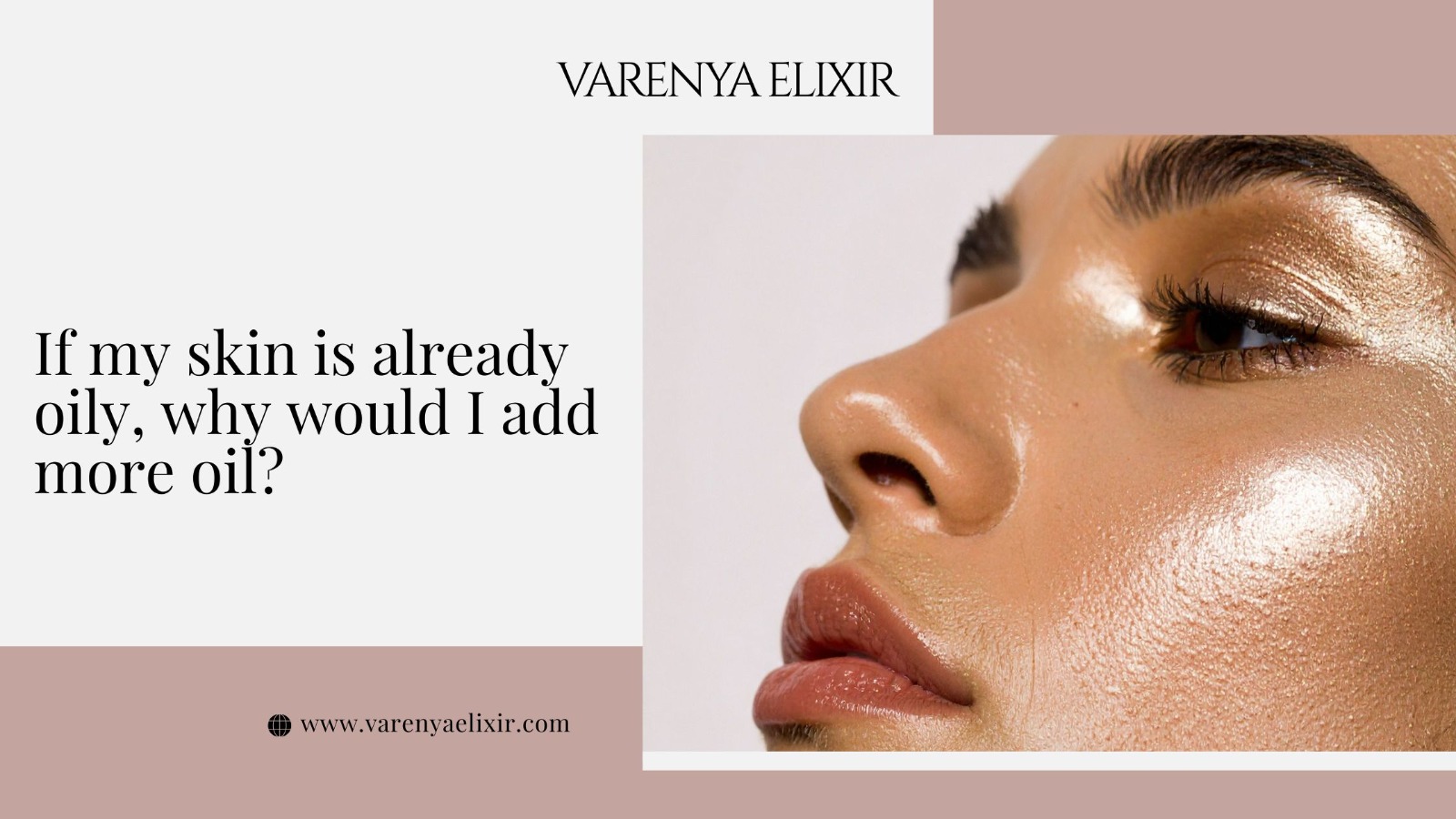
Face oils have been misunderstood for decades. There is confusion among consumers about whether they have oily or combination skin. We usually believe, ‘if my skin is already oily, why would I add more oil?’
Your perception is actually outdated. Modern dermatology, with time-tested evidence, paints a different picture. When formulated correctly, face oils can help maintain balance, refine skin tone, and enhance oily skin.
Let us debunk the myths and understand the truth behind face oils and serums, and whether they actually belong in your daily skincare ritual.
Oily skin is never just about excess oil; it indicates imbalances in your skin's health.
When your skin is:
Your skin needs to compensate by producing more sebum, not less.
Let us understand a simple circle:
Over-cleansing – dehydration – increased oil production – breakouts
In this scenario, only mindfully crafted face oil serum for dry skin or oily skin can actually help restore equilibrium.
It is perhaps the common belief among consumers.
The truth is: Not all oils behave the same way.
If your skin is receiving ample nourishment, it no longer needs to produce excess oil.
A surprising fact is that oily skin can be dehydrated too.
The actual thing is: hydration means water in your skin, but oil’s job is to keep that water from slipping away. If your skin does not get enough water, it starts reacting in different ways, such as excess sebum production, dehydration, and irritated skin.
That is why using both serums and face oils in your ritual works so well. Serums deliver the hydration and target issues, while oils lock in all that goodness and shield your skin.
The result? Skin that feels balanced and looks smoother.
Heavy and chemical-rich face oils can clog pores. Contrarily, premium, plant-based oils do the opposite.
The main thing is selecting a formulation that is lightweight, purpose-driven, and lightweight.
Most skincare enthusiasts miss this about face oils: they can actually tell your skin to calm down and stop producing excess oil.
Here’s what happens when you use plant-based, organic formulations: they protect your skin’s natural fats, fight off that oil production triggered by dryness, and slowly brighten your skin tone.
Hence, if you have combination skin, which is honestly pretty common while residing in the UK environment, face oils can make a big difference.
In the contemporary era, our skin is exposed to:
These factors weaken your skin barrier and disrupt its natural balance.
A mindfully crafted plant-based oil can:
This is particularly relevant in the UK, where weather conditions can make your skin both oily and dry.
Varenya Elixir aims to provide precision over excess with time-tested solutions. Our formulations are crafted to support your skin.
Renewal and Sebum Perfector Face Oil is a mindfully crafted solution to address this balance.
Contrary to conventional heavy oils, this formulation:
Rich in Kumkumadi oil, Pirella Oil, Rosehip Oil, and Saffron, this refined ritual supports your skin’s capability to self-regulate and restore.
Serums pack your skin with active ingredients and hydration. Face oils, on the other hand, seal in moisture and help strengthen your skin barrier.
When you use both, you get a balanced ritual that covers all the bases. But if you prefer to keep things simple, a thoughtfully crafted face oil can be enough.
These days, skincare has evolved into a practice of healing your soul. We know oily skin actually needs balance, not endless scrubbing or stripping. It demands hydration and good nutrients. And using fewer, high-quality products always wins out in the long run.
Using the right formulation crafted with natural botanicals can make a difference. It helps fix the issue.
At Varenya Elixir, we focus on skin that stays healthy for life. We keep things simple, mindfully sourcing botanicals, and make sure every formulation supports your skin instead of working against it.
Real skincare is not a battle. It is about knowing your skin and taking care of it the way it deserves.
FAQs
Yes, you can, just make sure the oil is lightweight and non-comedogenic. If you pick the right one, a face oil can actually help balance your skin’s oil production and even calm breakouts that come from an out-of-whack skin.
You don’t have to. Face oils and moisturizers do different things. Oils mainly lock in moisture, while most moisturizers add hydration and help keep it there. Depending on your skin and routine, you might use just one or both.
Try starting with once a day, ideally at night. See how your skin reacts, and then adjust from there, more or less, depending on what your skin needs.
Reference: https://www.scribd.com/document/844761263/The-Facts-About-Oily-Skin-Care